
Executive Summary
Evaluate ski body armor as a complete system: its coverage map, low-temperature padding response, carrier fit and model-specific certification evidence must support the same intended use. This guide helps sportswear brands, sourcing directors and team managers prepare a wholesale or custom OEM brief, using Shenochi’s ESA foam ski and snowboard body armor jacket as a practical reference.
Ergonomic Padding Layout
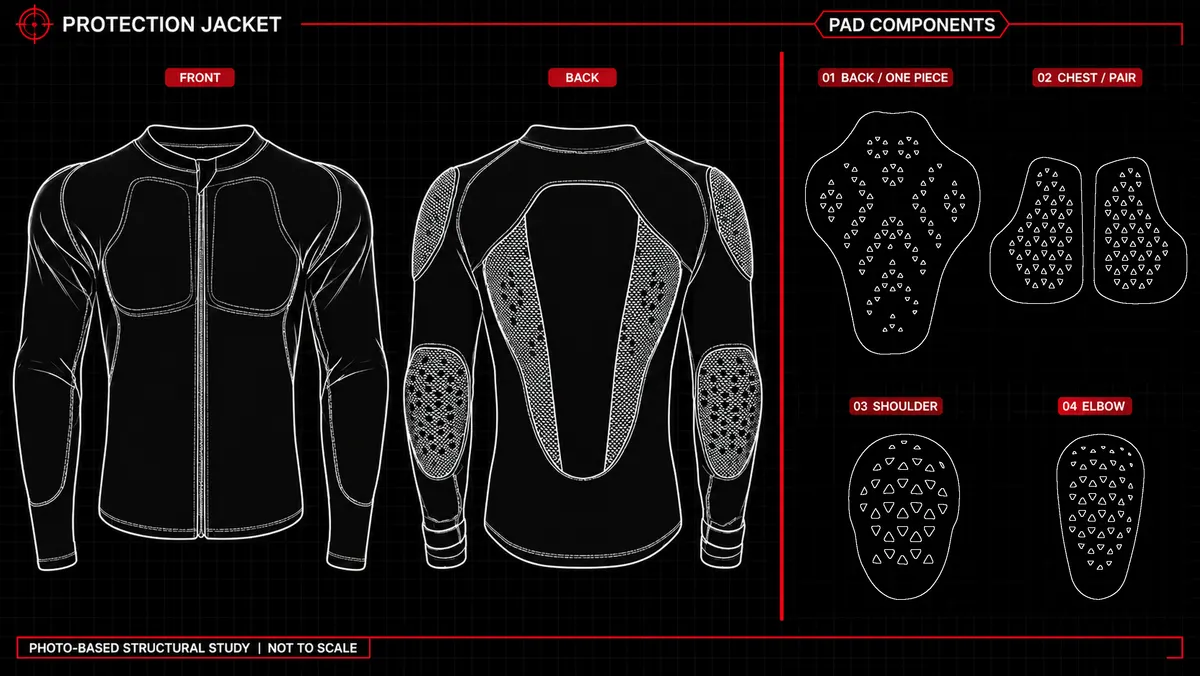
A sourcing brief should translate any requirement for full torso coverage into named, dimensioned protection zones and identify the shoulder and elbow coverage separately. In the illustrated ski body armor jacket, the designated zones are Back (One Piece), Chest (Mirrored Pair), Shoulders (Molded Insert), and Elbows (Molded Insert); this does not mean continuous protection across the ribs, abdomen or every gap between pads.
Translate that layout into checks the supplier can demonstrate:
- Back: specify the required protected area and its position relative to the wearer’s torso. A one-piece pad is a construction description; its outline does not establish a certified full-back classification.
- Chest: check the mirrored inserts with the front zipper closed. Mark the center opening and remaining gaps on the coverage map instead of treating the garment front as one continuous protector.
- Shoulders: check whether the molded insert stays centered during reaching, pole movement and arm elevation.
- Elbows: check alignment in flexion, extension and a riding stance. Review sleeve rotation as well as the pad’s static position.
The distinction between full-back, central-back and lumbar protection is part of EN 1621-2, making the documented classification more useful than the pad’s appearance alone. Back-protector guidance
Use close-ups to define sample checks
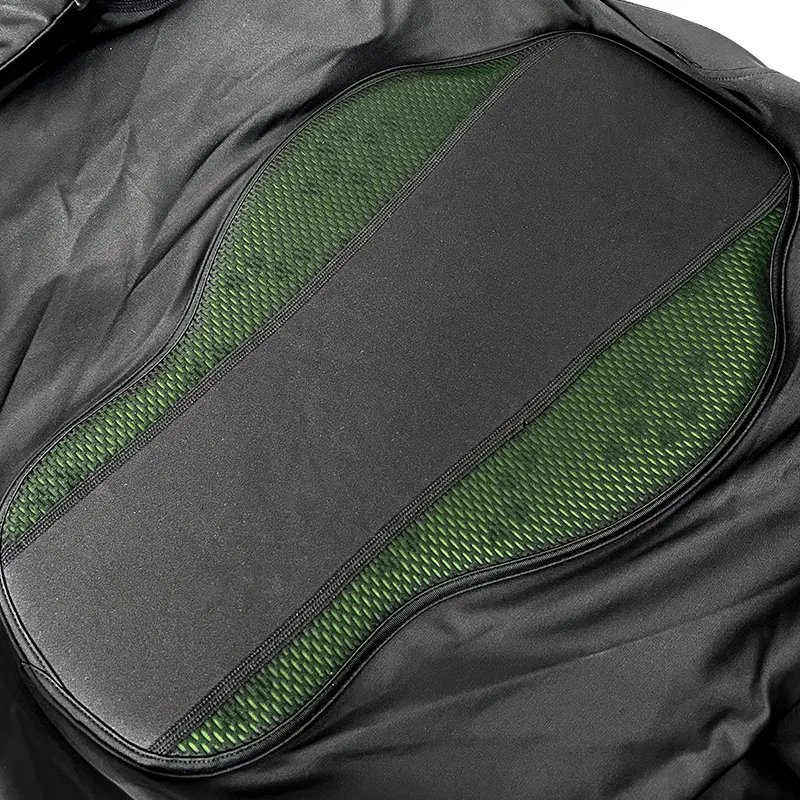
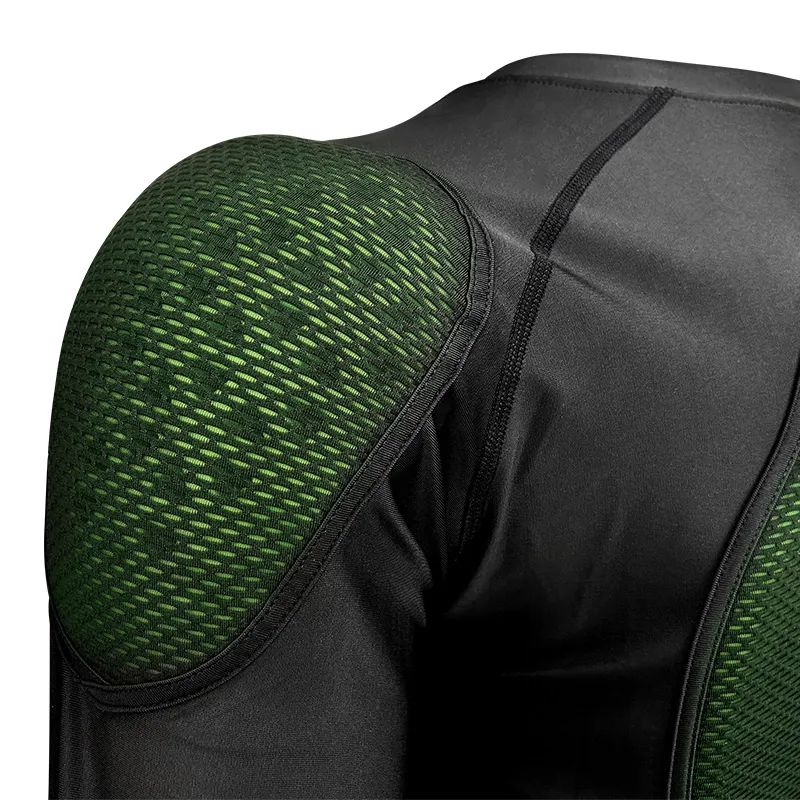
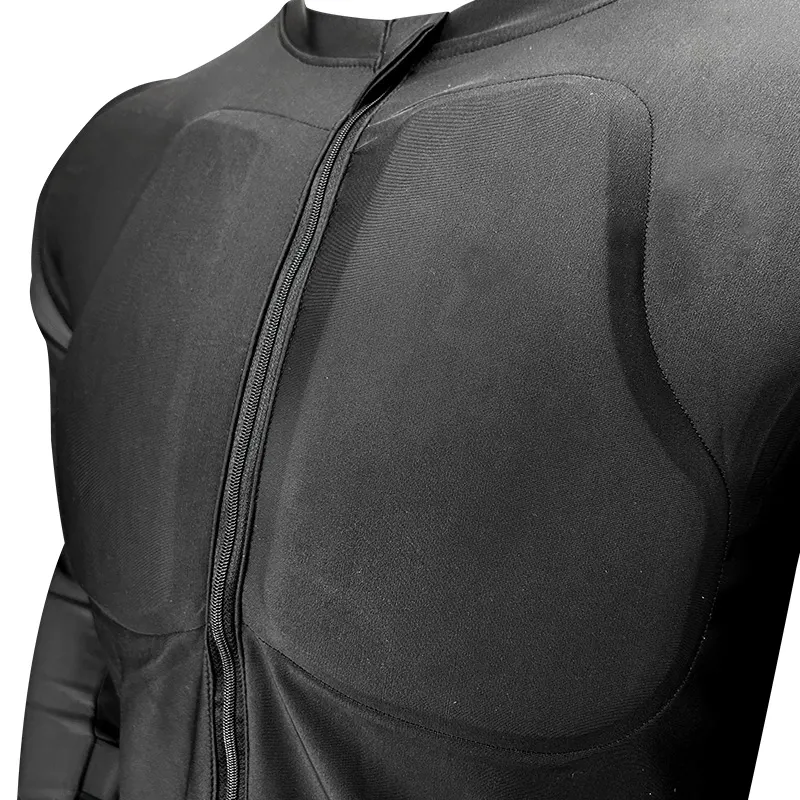
For OEM development, approve the coverage map across the size range. A larger garment pattern does not by itself establish that the pad position and protected area remain appropriate; review graded samples, not only the middle size.
The Sub-Zero Material Challenge: Evaluating ESA Foam
At −10°C to −20°C, a foam’s room-temperature feel is an incomplete selection criterion. Polymer formulation influences stiffness, recovery and energy dissipation: for example, published research on specific viscoelastic polyurethane foams found increased stiffness at lower temperatures. Because cold response varies by formulation, assess the finished protector at the intended temperature rather than relying on its room-temperature feel. Foam research
What ESA contributes
In the low-temperature configuration of this ski and snowboard body armor jacket, ESA (Energy Shock Absorbing) foam retains flexibility and impact-dissipating behavior at −10°C to −20°C, allowing the protective inserts to flex with the wearer rather than becoming rigid during normal cold-weather use.
The engineering principle is viscoelastic deformation: part of the mechanical work is dissipated during loading and recovery. Formulation matters because the balance between flexibility, recovery and damping changes with temperature; maintaining useful viscoelasticity does not mean those properties remain identical at every temperature. Foam research
For sourcing, use the ESA designation to identify the specified material, then request evidence for the actual insert design:
- Material grade, controlled thickness and any density specification used in production.
- Cold-conditioning temperature, duration and the interval before impact testing.
- Transmitted-force results for the relevant protector, including sample identity and test method.
- Confirmation that production geometry, ventilation openings and material grade match the assessed version.
EN 1621 guidance describes optional cold impact conditioning at −10°C. It does not establish a −20°C result: if −20°C is part of your acceptance brief, request evidence at that condition and distinguish supplementary testing from the conditions covered by the standard. EN 1621 guidance
Fabric Construction & Breathability
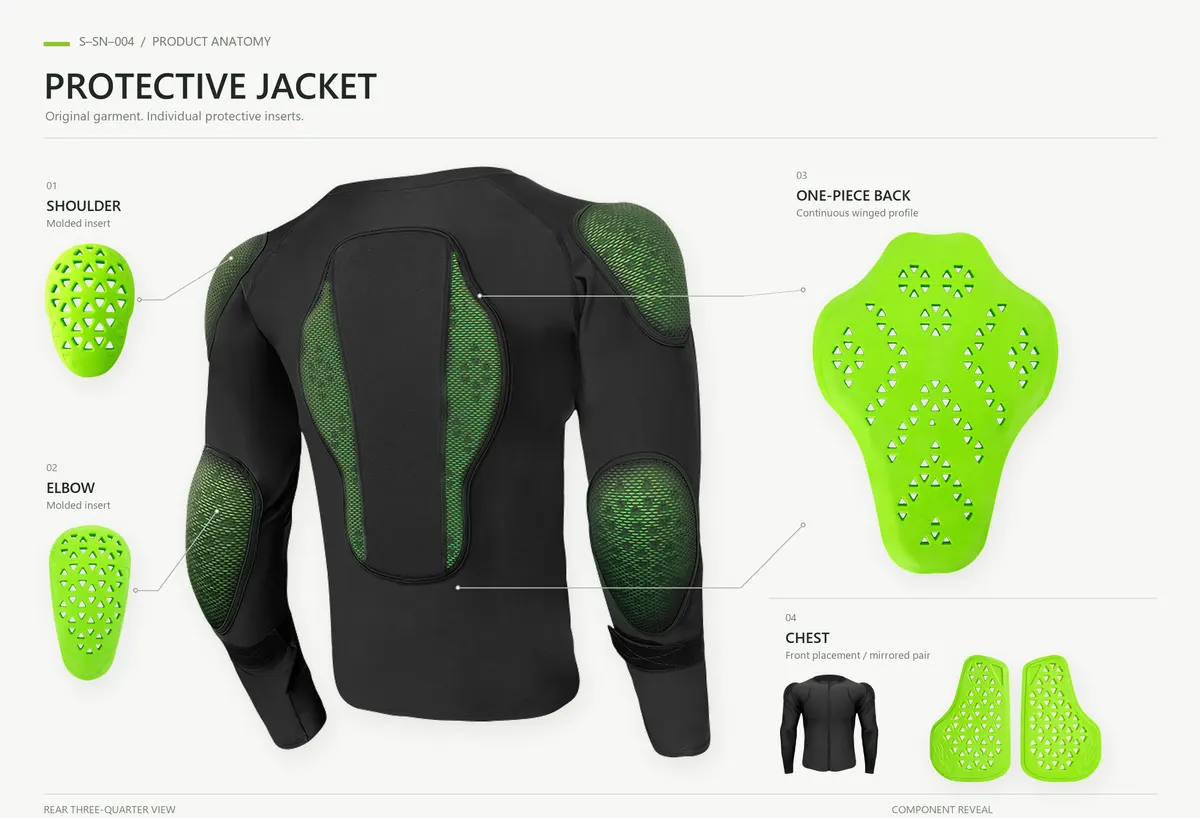
The padding and carrier must be evaluated together. The ESA foam protective jacket uses an 82% nylon and 18% spandex carrier for four-way stretch and a close fit around the inserts. For an OEM brief, specify knit construction, fabric weight, stretch recovery and garment measurements alongside the fiber composition so that the required fit and compression can be assessed.
Mesh, edge finishing and front closure
The jacket combines mesh over several protection zones, stitching around pad boundaries and a front zipper. Review these construction details in the sample:
- Breathability: inspect the complete path through mesh, padding openings and adjacent layers. Mesh texture alone does not establish measured air permeability or thermal comfort under a ski shell.
- Edges and seams: inspect bound or finished pad perimeters, seam stretch and recovery after repeated movement. Check for abrasion against the intended base layer and for distortion that changes pad position.
- Front zipper: check closure under the intended fit, clearance from the chest inserts and ease of operation with the wearer’s usual layers. Agree on the required closure and seam tests for the sample brief.
For supplier comparison, agree on measurable ventilation and seam-durability criteria rather than judging performance from appearance alone.
Adjustment-band retention and layering
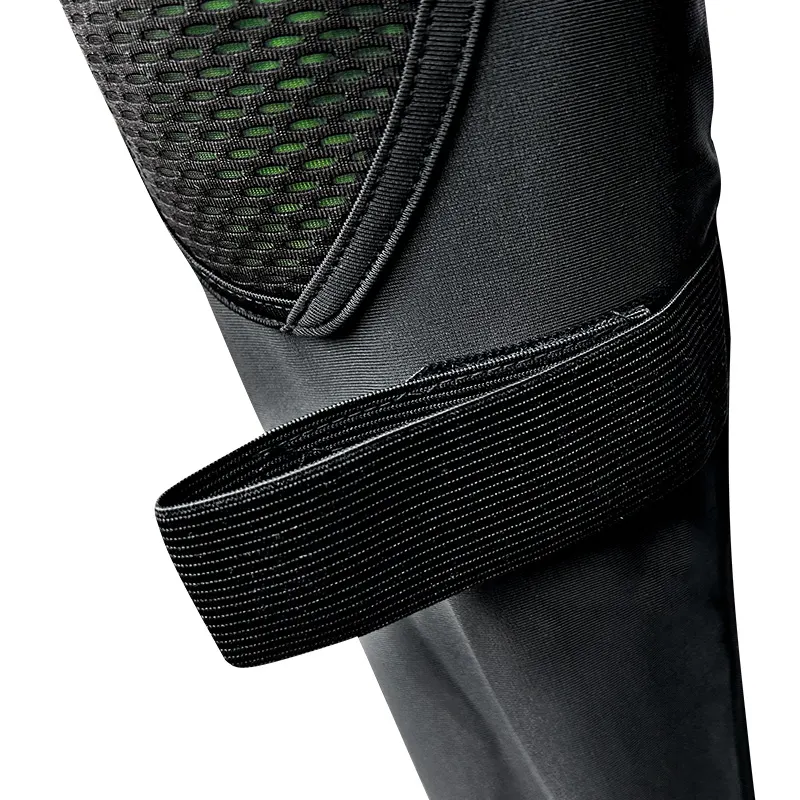
Use the hook-and-loop adjustment to assess whether the sleeve and elbow insert remain in the intended position during movement. Check the available adjustment range, wearer comfort and engagement after repeated opening; do not compensate for an unsuitable garment size by overtightening the band.
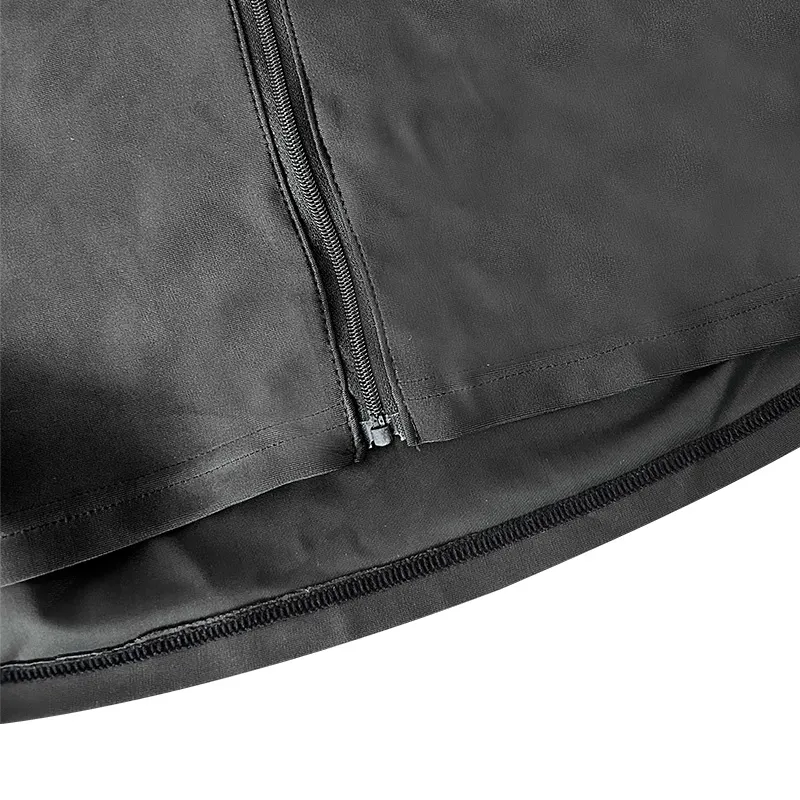
Evaluate the jacket in a ski stance, seated and with arms raised, using the planned base layer, mid-layer and shell. Record hem ride-up, pressure points and pad migration as agreed sample-review criteria. A secure fit should be demonstrated in the wearer’s layering system, not inferred from the fiber ratio.
Safety Certifications — The TÜV Rheinland Benchmark
CE marking, an EN test standard and an independent certificate have different roles. CE marking expresses conformity with applicable EU product requirements; “Level 1” is a performance classification within the relevant protector standard, rather than a universal CE rating for an entire jacket. Official EU guidance also places responsibility on a business that has a product made and sells it under its own brand, making document review relevant to OEM buyers. Official CE guidance
The EN 1621 series originates in motorcyclists’ impact protection. When using it as a benchmark for ski or snowboard equipment, check both the applicable standard part and the intended-use scope of the conformity documentation. A reference to EN 1621 does not establish coverage for every snow-sport hazard. EN 1621 guidance
| Standard | Protection addressed | What Level 1 tells the buyer | Evidence to request |
|---|---|---|---|
| EN 1621-1:2012 | Limb/joint protectors, relevant to shoulders and elbows | Limb-specific impact performance; SATRA summarizes the lower-tier limits as mean maximum transmitted force below 35 kN and no individual result over 50 kN. | Protector identity, position, size/coverage designation and the applicable conditioning results. |
| EN 1621-2:2014 | Back and lumbar protectors | Back-specific impact performance; SATRA summarizes the lower-tier limits as mean maximum transmitted force below 18 kN and no individual result over 24 kN. | Full-back, central-back or lumbar classification, protected area, size designation and test results. |
| EN 1621-3:2018 | Chest protectors, including divided and full designs | Level 1 addresses force transmission; Level 2 also addresses force distribution. Back-protector limits must not be substituted. | Chest-specific assessment, divided/full design identification and the exact tested configuration. |
EN 1621 uses separate test scopes and methods for different protective components. Match each pad to its documented assessment scope. EN 1621 guidance
Verify the document, the product and the configuration
The protective pads used in the ESA foam ski and snowboard body armor jacket have CE Level 1 certification through TÜV Rheinland. This certification applies to the documented protectors; it is not a separate certification of the complete garment. For procurement review, match the supporting documents to the applicable standard parts, protector coverage and test conditioning; a back-protector certificate should not be extended to every other insert by assumption.
A recognized assessment organization makes verification possible, but its name or logo is only the beginning. TÜV Rheinland’s Certipedia service supports certificate searches by individual identification number. Use it where the certificate is listed, or obtain confirmation from the issuer when public verification is unavailable; a missing public entry alone is insufficient to decide validity. Certificate verification
Before approving the supplier, match:
- Identity: certificate holder, manufacturer, model/version and the assessed protectors.
- Scope: standard part and edition, performance level, protected area, size range and intended use.
- Test evidence: report number, laboratory, sample description, conditioning and results—not just a certificate cover or logo.
- Conformity package: the applicable declaration of conformity, instructions, marking and certificate status.
- OEM changes: whether revised foam, thickness, perforations, pad shape, carrier retention or branding require document updates or reassessment before approval.
Use this as a review sequence, with the supplier and assessment body determining the effect of the proposed changes. The EU guidance requires conformity documentation to remain aligned with relevant product changes. Official CE guidance
The 5-Step Buyer Checklist
| Step | What to check | What to send or request |
|---|---|---|
| 1. Coverage Map | Back, mirrored chest, shoulder and elbow zones; gaps, pad location and size grading. | Annotated front/back views, required protected areas and the matching pad/garment size plan. |
| 2. Fit/Layering | Position during movement, sleeve rotation, hem ride-up and compatibility with intended layers. | Wearer measurements, size mix, layering setup and sample fit-approval criteria. |
| 3. Construction | ESA grade and temperature version, carrier specification, mesh path, edge finishing, seams, zipper and adjustment retention. | Tech pack, bill of materials, construction details and agreed sample checks. |
| 4. Evidence/Certificates | Exact model/version, relevant EN 1621 parts, Level 1 scope, TÜV documents and cold-test conditions. | Full reports, applicable certificate and declaration, marking details and issuer-verification information. |
| 5. Order Details | Intended market and use, wholesale versus custom scope, size/color mix, branding and packaging. | Target quantity by size, artwork, destination and the approval responsibilities for the final specification. |
Use this checklist to align the product specification, sample approval and supporting documents before requesting a quotation.
Technical References
- Foam research Malewska et al., Bio-Based Viscoelastic Polyurethane Foams: Functional Behavior Across Application Temperatures, Polymers 18(2), 174 (2026). Research on formulation-dependent temperature response in viscoelastic polyurethane foams.
- EN 1621 guidance SATRA, EN 1621 — Motorcyclists’ clothing protecting against mechanical impact. Technical guidance on the separate protector standards, performance levels and optional temperature conditioning; consulted November 10, 2026.
- Back-protector guidance SATRA, A European standard for motorcyclists’ back protection. Explains EN 1621-2:2014 coverage classifications and conditioning; consulted November 10, 2026.
- Official CE guidance European Union, CE marking, Your Europe, page checked July 17, 2026; consulted November 10, 2026. Supports the distinction between manufacturer responsibility, conformity documentation and CE marking.
- Certificate verification TÜV Rheinland, Certipedia. Certificate verification service; consulted November 10, 2026.
Review the ESA Foam Ski and Snowboard Body Armor Jacket
To see how coverage, fabric and adjustment features work together, review Shenochi’s ESA Foam Ski and Snowboard Body Armor Jacket. Use its construction as a starting point for your brief, then specify the ESA foam low-temperature configuration when requesting a bill of materials and certification package matching the proposed sample.
Bring your tech pack, coverage map and size mix to Shenochi for a custom development review, together with your intended market, layering requirements and required certification scope. These inputs give the engineering and sourcing teams a clear basis for reviewing the proposed construction and agreeing on sample acceptance criteria.