嵌入的文件
 SHENOCHI
Introduction:
Embarking on the journey of learning to snowboard is an exciting prospect, filled with the promise of mountain adventures and the thrill of gliding on snow. For any new rider or their family, the first and most important consideration is safety. While the necessity of a helmet is a universally accepted, non-negotiable truth, the question of "what comes next?" can be a confusing one. In a market filled with an array of protective gear, from padded shorts to back protectors, it is crucial to approach safety with a scientific, data-driven mindset. A deep dive into the biomechanics of a beginner's fall reveals a clear and compelling answer: after the helmet, the wrist guard is the single most critical piece of equipment. It is the keystone of a beginner's armor, a foundational tool that supports the entire structure of their confidence and progression.
The Problem: The Prioritization Puzzle and the Statistical Certainty of the FOOSH
For a newcomer to snowboarding, especially one on a budget, the wall of available protective gear can be daunting. This creates a difficult prioritization puzzle. Without a clear understanding of the specific risks involved, it's easy to misallocate resources, leaving the most vulnerable areas unprotected.
The solution to this puzzle lies in decades of sports medicine data and a fundamental understanding of human reflexes. Overwhelmingly, studies show that wrist injuries are the most common non-head injury sustained by beginner snowboarders. This is not a matter of chance; it is a biomechanical certainty driven by a powerful, instinctual survival mechanism: the FOOSH (Fall On an Outstretched Hand) reflex.
When a person falls unexpectedly, their brain's immediate, subconscious priority is to protect the vital organs and head. It does this by commanding the arms and hands to extend and absorb the impact. For a beginner snowboarder who has not yet developed the muscle memory for controlled falls, nearly every single tumble—and there will be dozens in a single day—will involve this FOOSH mechanism. This subjects the wrists to a level of repetitive, high-impact stress that no other part of the body faces with such relentless consistency.
Solution: The Keystone of the Protective System
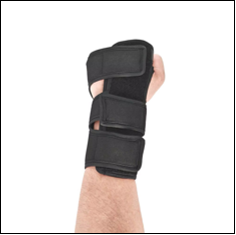
Given the statistical and biomechanical certainty of the FOOSH fall for beginners, the D-SN-002 Plastic Wrist Guard should be considered the logical, science-backed second piece of gear to acquire after a helmet. It functions as the keystone in an arch—the central piece that holds the entire structure together.
The Direct Countermeasure to the Primary Threat:This wrist guard is the only piece of gear specifically engineered to counteract the single most common injury mechanism in the sport. The "Extra Thick Splints" made of high-impact plastic create a rigid exoskeletal cage around the wrist. This provides powerful "Shock Absorption Features" not by cushioning, but by preventing the dangerous hyperextension of the joint and redirecting the impact forces up the stronger bones of the forearm. It is the direct scientific solution to the most probable and predictable threat a beginner will face.
The Foundation of Confidence and Progression:Crucially, the role of the wrist guard extends beyond physical protection into the realm of psychology. It is the keystone of confidence. The primary reason beginners fail to progress is the fear created by the sharp, punishing pain of repeated wrist impacts. By neutralizing this pain, the wrist guards break the negative feedback loop that causes a rider to become tense and defensive.
A rider who is not afraid of shattering their wrist is a rider who can relax. A relaxed rider can maintain better balance, learn more quickly, and is far less likely to have the kind of severe, out-of-control crash that might necessitate other forms of padding, like a back protector or heavily padded shorts. In this way, protecting the wrists first makes the entire system of learning safer and more efficient. It creates a stable, confident rider upon which all other skills can be built.
Key Benefits of Prioritizing Wrist Protection:
Addresses the Highest-Probability Injury First: Provides a direct, engineered solution to the single most frequent and predictable injury faced by beginner snowboarders, based on decades of medical and sports data.
Acts as a "Confidence Keystone": By eliminating the pain and fear from the most common type of fall, wrist guards build the essential psychological confidence that is the true foundation for all skill progression, which in turn reduces the overall frequency of falls.
A High-Value and Cost-Effective Safety Investment: Represents a relatively small investment that prevents a very common and potentially very expensive and debilitating medical issue, such as a fracture requiring a cast or surgery.
Prevents a Common Reason for Quitting the Sport: Many potential snowboarders are permanently discouraged from the sport after the first day due to the intense, cumulative pain of repeated wrist impacts. This gear directly solves that critical problem.
Provides a Transferable Safety Habit: The discipline of wearing wrist guards while snowboarding is directly applicable and equally important for off-season cross-training activities like skateboarding and rollerblading, building a lifelong habit of safety.
Conclusion:
While a complete system of "all-round" protection is the ideal for any snowboarder, the process of building that system should be a logical, data-driven one. For the beginner rider, the science and statistics are unequivocally clear: after protecting the brain with a helmet, the next critical and foundational step is to protect the wrists. The D-SN-002 Plastic Wrist Guard is the perfect tool for this essential role. By providing a robust, scientific defense against the sport's most common injury, it functions as the true keystone in a beginner's armor. It protects the body, but more importantly, it unlocks the confidence that is the key to a safe, successful, and enjoyable lifetime on the snow.

Location
NO 152, Zenglu Road, Chashan Town Dongguan City, China

Email
shenochisport@gmail.com

Phone
Carrie +86 18944754602
Nickle +86 18948618470
Gaga +86 18944763147